
Concrete, clay and natural stone
Paver and Patio Cleaning
Paver cleaning for Melbourne patios, courtyards, pool decks, paths and paved driveways, with the pressure set for the stone in front of us. Concrete and clay pavers can take a firm clean; sandstone, limestone and travertine are softer and get a treatment and a gentle rinse instead. Moss, lichen and grime come out, the joints stay intact, and it all sits within our wider pressure washing service for Melbourne homes.
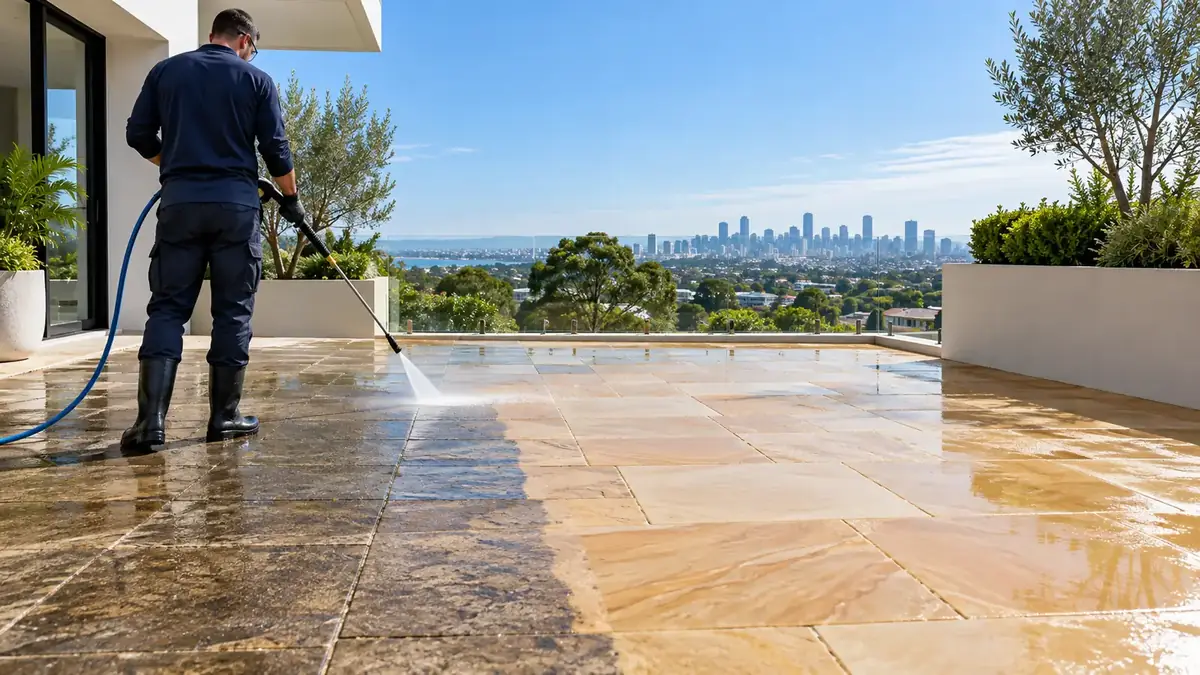
- Area
- 20 to 40 m²
- Stone
- Sandstone
- Method
- Treat + low rinse
- Guide price
- $180 to $320
Know your paver
How does paver and patio cleaning in Melbourne change with the stone?
Paver and patio cleaning in Melbourne changes with the stone because hardness varies so much. Bluestone, granite and clay pavers are dense and handle a surface cleaner. Concrete pavers sit in the middle. Sandstone, limestone and travertine are soft and porous, so they are cleaned mostly with treatment and low pressure.
Concrete pavers
The most common paver in Melbourne backyards. Surface cleaner on a moderate setting; watch the jointing sand.
Hardness
Clay brick pavers
Hard-fired and tough. Prone to white efflorescence and moss in shaded joints.
Hardness
Sandstone
Warm and soft. Pits and wears under a narrow jet, and can show iron marks from pots.
Hardness
Limestone
Pale and porous. Acid of any kind etches it, so only stone-safe products go near it.
Hardness
Bluestone
Victoria's own basalt. Very hard, but streaks if cleaned unevenly and shows every drip line.
Hardness
Travertine
Popular around pools. Natural holes trap dirt; acid-sensitive like limestone.
Hardness
Porcelain outdoor tiles
Dense and non-porous, so the tile cleans easily. The grout lines are the weak point.
Hardness
Granite
Hard and hard-wearing. Mostly used as setts and edging; takes a normal clean well.
Hardness
Not sure which you have? A few clues help. Sandstone feels slightly gritty and shows faint banding, limestone is pale and smooth with tiny fossils or pits, bluestone is dark grey and heavy, and concrete pavers often have small bubbles and a very even colour. A close-up photo with your hand for scale lets us tell you for certain, and it is the single most useful thing you can send with a quote request.
Method
What happens during a patio clean?
A patio clean starts with clearing and weeding the joints, then a treatment for moss and lichen, a test patch, and the clean itself at the right pressure for the stone. Joints are checked once the surface dries, and re-sanded where the sand has dropped or washed out.
- Clear the patio
Furniture, pots and the barbecue moved, and any fragile plants near the edge covered.
- Weed the joints
Weeds and thick moss pulled or scraped out so they do not simply grow back from the root.
- Treat and wait
A treatment for moss, lichen and algae goes on and is left to soak in.
- Test, then clean
A hidden corner is cleaned first; if it looks right, the rest follows in overlapping passes.
- Rinse and assess
Loose sand and debris rinsed off, and joints checked for gaps once dry.
Re-sanding happens once the pavers are fully dry, which on a cool Melbourne day can mean later in the afternoon or a short return visit. Wet sand sticks to the surface and will not settle into narrow joints. Where a courtyard has no easy way to drain, we also squeegee standing water off the low spots so the stone dries evenly and does not show tide marks.
Simplified section through two pavers on their sand bed. Some sand loss is normal in any thorough clean; the fix is re-sanding, not leaving weeds in place.
Growth and stains
What builds up on Melbourne pavers?
Moss and weeds in the joints, black lichen spots, green algae, white efflorescence, rust rings from pots and furniture, leaf tannins, and barbecue fat near outdoor kitchens. Growth and grime clean off; lichen and efflorescence need specific treatments, and rust needs a stone-safe remover.
Fill joints in shaded courtyards and push pavers apart as they grow.
Small dark circles that cling hard; treatment kills them and they fade over weeks.
A slimy film on pool decks and south-facing paths, and a real slip risk.
White salt bloom, common on clay and concrete pavers after rain.
Orange circles from metal furniture feet, pots and fertiliser.
Grease near the barbecue and brown leaf stains from nearby trees.
Lichen is the one that surprises people. Those black spots are living organisms rooted into the surface of the stone, and pressure strong enough to blast them off would also scar sandstone or limestone. The better approach is a treatment that kills the lichen, a gentle clean, and patience: the dead spots continue to fade over the following weeks as rain washes them out.
If you would like to tackle a small area yourself first, our guide on how to clean sandstone, limestone and concrete pavers covers products that are safe for each stone and the mistakes that cause permanent marks.
Pool decks deserve a mention of their own. Constant splashing keeps the stone damp, sunscreen and body oils build up near the steps, and algae forms along the shaded side of the fence. That combination makes a pool surround one of the most slippery places at home, especially for children running on it. Most pool decks look after themselves well with a clean every spring before swimming season, and a quick treatment in autumn if the fence line stays shaded.
Stone and joint care
How are soft stone and joints protected?
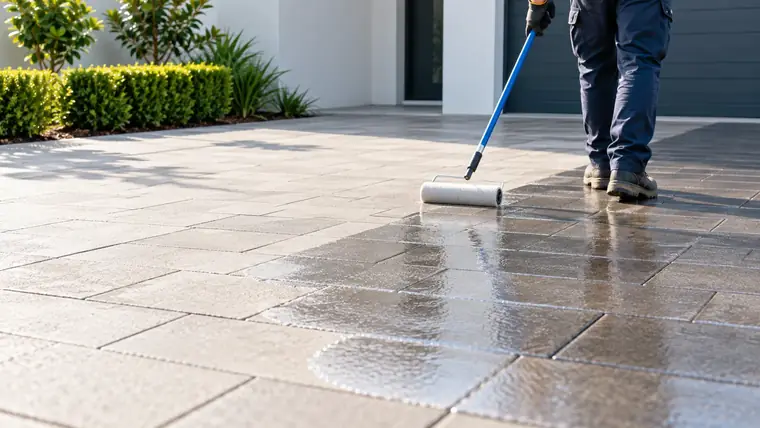
Soft stone is protected by letting the treatment do most of the work and keeping pressure low, with a wide fan tip held well back. Joints are protected by cleaning across the paving at a shallow angle, never straight down into the gaps, and re-sanding wherever sand is lost.
Rinse water from a patio carries sand, moss treatment and grime, and in most courtyards the nearest grate runs to the street drain. EPA Victoria's stormwater guidance asks everyone to keep chemicals and sediment out of that system, so we cover the grate and sweep up the sand rather than hosing it away.
Acid is the biggest risk to natural stone and the most common DIY mistake. Hydrochloric acid, sold as brick cleaner, dissolves the calcium in limestone and travertine and can leave sandstone blotchy or yellowed. Nothing acidic goes on a natural stone patio on our jobs.
Porcelain tiles need a different kind of care. The tile itself shrugs off a clean, but grout lines can erode, so the pressure is kept moderate and the wand angled along the lines rather than into them. Around pools, stone coping and the joint at the water's edge are finished by hand.
A clean patio is the best starting point for a sealer, which slows moss, makes spills easier to wipe up and helps lock jointing sand in. Read more about sealing pavers after they are cleaned before deciding whether it suits your stone.
Prices
How much does paver cleaning cost?
Paver cleaning in Melbourne usually costs $4 to $6 per square metre for concrete and clay pavers and $5 to $8 for natural stone, which takes longer at lower pressure. Re-sanding joints adds roughly $2 to $4 per square metre, and small patios fall under a minimum of about $180.
| Paving | Guide price | Why |
|---|---|---|
| Concrete or clay pavers | $4 to $6 per m² | Firm enough for a surface cleaner |
| Sandstone, limestone, travertine | $5 to $8 per m² | Slower, treatment-led clean at low pressure |
| Bluestone and granite | $4 to $7 per m² | Hard stone, but needs even passes to avoid streaks |
| Porcelain outdoor tiles | $4 to $6 per m² | Quick to clean; grout lines take care |
| Re-sanding joints | $2 to $4 per m² | Kiln-dried or polymeric sand swept in once dry |
Price moves most with joint condition: a courtyard full of weeds takes far longer than one with a little surface moss. See every rate side by side on our pressure cleaning prices page, including decks and house washing if you are planning a bigger outdoor refresh.
The type of sand matters as much as the refill. Plain kiln-dried sand is cheap and easy to top up but can wash out again in heavy rain. Polymeric sand contains a binder that sets once it is misted with water, which holds joints firmer and discourages weeds and ants, though it must go onto a completely dry patio to set cleanly. We will recommend one or the other based on how wide your joints are.
Quote by photo
What should you send for a paver cleaning quote?
Send one photo of the whole patio or path, one close up of the stone with your hand beside it, and one of the worst joints or stains. With your suburb and a rough size, that is enough for us to identify the stone, choose the method and give you a written price.
The whole area. Shows size, shape and anything that needs moving.
One paver up close. Your hand in the frame tells us the stone type and scale.
The worst joints. Weeds and sand loss decide whether re-sanding is needed.
Any sealer history. Tell us if it was sealed, and roughly when.
Questions
What do people ask about paver and patio cleaning?
How much does paver cleaning cost?
Will pressure cleaning damage my pavers?
What time should I allow for a patio clean?
Mossy joints or a tired sandstone patio?Send three photos and we will identify the stone and price it.
Send photos