
Paths, slabs, carports and pool surrounds
Concrete Cleaning
Concrete cleaning for the parts of a Melbourne property that are not the driveway: side paths, alfresco slabs, pool surrounds, carports, garage floors and steps. We lift dirt, black mould, algae and everyday stains with the pressure each area can take, then leave it rinsed and safe underfoot. This page sits within our Melbourne pressure washing service, and most homes combine two or three of these areas in one booking.
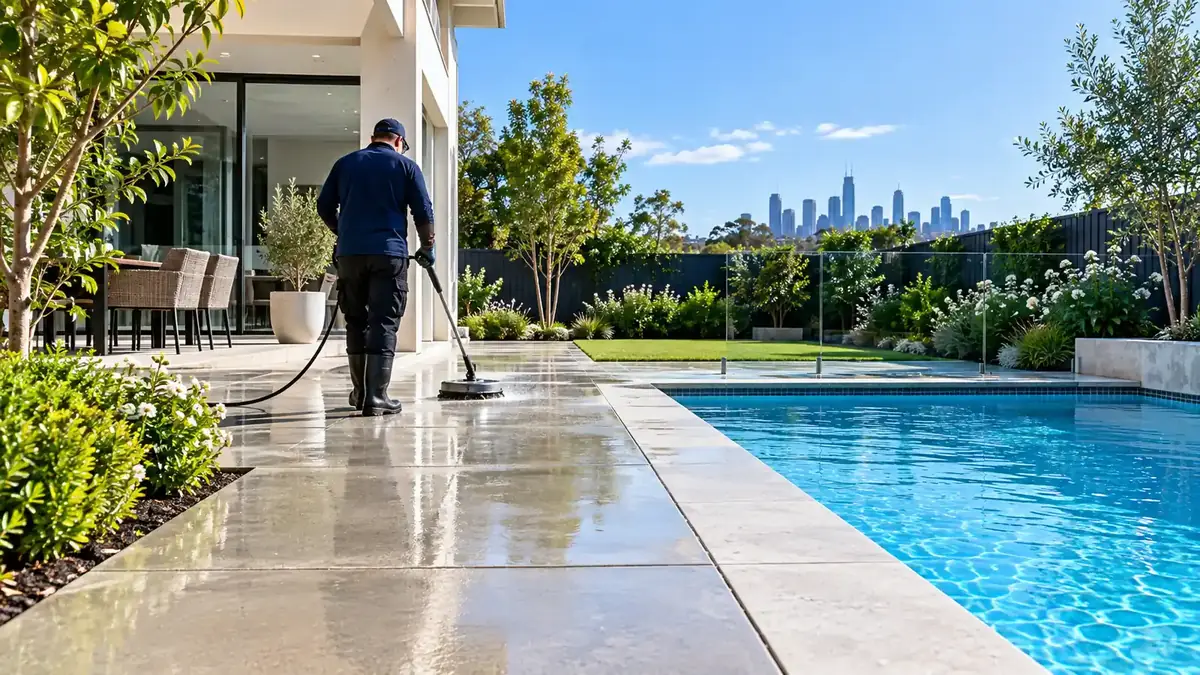
- Areas
- Path + alfresco
- Size
- 25 to 45 m²
- Allow
- Half a morning
- Guide price
- $180 to $300
Areas we clean
What does concrete cleaning in Melbourne cover?
Concrete cleaning in Melbourne covers every outdoor slab around a home or small building: paths and side passages, alfresco and patio slabs, pool surrounds, carports, garage floors, steps and landings. Each area collects a different kind of grime, so the treatment and pressure are chosen area by area rather than one setting for the whole job.
Paths and side passages
The narrow run between the house and the fence gets almost no sun, so this is where green algae and black mould turn slippery first.
Mould treatment firstAlfresco and patio slabs
Barbecue fat, food spills, drink rings and the dark squares left under outdoor furniture and pot plants.
Degreaser near the barbecuePool surrounds
Sunscreen, algae in the shaded corners and chlorine or salt residue, all right beside water that must stay clean.
Lower pressure, nothing into the poolCarports
Oil drips and tyre marks like a driveway, plus bird droppings and dust that blow in under the roof.
Oil treated separatelyGarage floors
Tyre dust, fluid drips and the grey film that builds up on bare concrete. Coated and polished floors need a gentler approach.
Water squeegeed outSteps and landings
Front steps and back landings take the most foot traffic and are the worst place for algae to make a surface slick.
Nosings and edges by handPlenty of Melbourne concrete was poured decades ago with a simple broom finish, and it has soaked up years of dirt. Newer slabs around pools and outdoor kitchens are often smoother and sometimes sealed. Both clean up well, but they react differently: old porous concrete drinks in treatment and takes a slower pass, while a sealed slab sheds grime quickly and needs less pressure. Telling the two apart is the first thing we do on site, usually with a few drops of water to see whether it beads or soaks in.
The same work suits small commercial and shared properties too. Townhouse common paths, the entry slab outside a medical suite or a cafe's rear courtyard are all concrete cleaning jobs rather than full commercial contracts. They usually suit an early start before people arrive, and we can leave a section roped off until it dries if foot traffic cannot be stopped completely.
Method and pressure
How is outdoor concrete cleaned properly?
Outdoor concrete is cleaned in four stages: wet the surroundings, treat growth and stains, clean the open slab with a rotary surface cleaner, then rinse and detail by hand. Pressure sits around 3,000 to 4,000 PSI on sound, bare concrete and comes down for sealed, coloured or coated surfaces and anywhere near a pool.
Where the mould is tells you a lot about a property. In Melbourne the south side of a house, a fence or a pergola gets the least winter sun, so the concrete there stays damp from May to September and grows a green or black film. The sunny side of the same yard usually only has dust and general grime. We treat the shaded strips harder and for longer, which is why a quote can change when we see which way the yard faces.
Pressure alone rarely fixes mould for long. Blasting it off takes away the visible layer, but microscopic growth left deep in the surface comes back within a season. A treatment that kills the growth, given ten or fifteen minutes before the clean, is what stretches the gap between cleans.
- Wet the surroundings
Garden beds, lawn edges and pool coping are soaked so nothing absorbs the treatment.
- Treat and wait
Mould treatment on shaded slabs, degreaser near the barbecue, then time to work.
- Clean the open slab
Overlapping passes with the surface cleaner for one even colour from end to end.
- Detail and rinse
Fan tip on steps, edges and joints, then a low rinse towards the right outlet.
The rinse is where a lot of backyard jobs go wrong. Water carrying degreaser or barbecue fat should never be hosed into the grated drain in the middle of an alfresco slab, because in most Melbourne homes that pit connects to the stormwater system, not the sewer. EPA Victoria's advice on stormwater is plain about keeping detergents and oils out of it. We rinse greasy areas onto lawn or garden where the soil can deal with small amounts, or collect the water where there is nowhere suitable.
You will not notice much of our visit beyond the noise. We connect to an outside tap, run hoses along the edges of the yard, and use a petrol machine so no extension leads cross wet ground. Pets are best kept inside until the slabs have been rinsed and the treatment is gone.
Stains and growth
Which concrete stains come off, and which only fade?
Growth, dirt, food and fat spills, leaf stains and fresh drips come off concrete completely. Rust, old oil and efflorescence usually fade a long way but can leave a trace. Etching, cement-based smears, deep paint and colour loss from past acid washing stay, because they are changes to the concrete itself rather than something sitting on it.
Comes off
- Black mould, algae, moss once treated and cleaned
- Dirt and dust film on broom-finished slabs
- Barbecue fat and food with degreaser and warm water
- Leaf and berry stains with an oxygen cleaner
- Bird droppings in carports and under trees
Fades, may leave a trace
- Rust spots from bore water or furniture legs
- Older oil in carports and garages
- Efflorescence, the white powdery bloom
- Water-based paint that has been there a while
- Pot plant rings on unsealed concrete
Stays
- Etching from acid or a past bad clean
- Cement and grout slurry set onto the slab
- Colour loss in coloured concrete
- Cracks and spalling, which are repairs
- Failed sealer that needs stripping
Efflorescence deserves a proper explanation because it confuses people. It is salt that water carries up through the concrete; when the water evaporates, the salt is left behind as a white crust. Pressure washing a slab that is still pulling up moisture can make it look worse a week later, as more salt surfaces. The right move is a dedicated efflorescence cleaner on a dry surface, and sometimes fixing the water source, such as a downpipe spilling onto the slab.
Rust is similar in that pressure is the wrong tool. It is a chemical stain, and a rust remover made for concrete does far more than extra force. Anything in the third column is worth knowing about before you book, so you are paying for what a clean can actually change.
There is also a point where cleaning is not the best use of money. If a path is cracked into loose pieces, the surface is powdering away under your shoe, or the slab has sunk and holds water, a clean will make it look better for a while without fixing the reason it keeps getting dirty. We will say so from the photos and suggest talking to a concreter before spending on a clean.
After the clean
How long does clean concrete stay clean?
Sunny, well-drained concrete usually stays presentable for two years or more after a proper clean. Shaded paths and slabs beside fences often need attention every twelve to eighteen months, because mould returns wherever the surface stays damp through winter. Sealing, sweeping and a little more sunlight all stretch that time.
- Sweep leaves weekly in autumn
Wet leaves left in a pile are what leave the brown tannin shadows.
- Let the sun in
Trimming a hedge or low branch over a path does more against mould than any product.
- Check downpipes
A downpipe spilling across a slab keeps it wet and feeds efflorescence.
- Mats under pot plants
Raised feet or saucers stop the dark squares that plants leave behind.
- Wipe spills early
Fat and wine lift easily in the first day and set once baked in by the sun.
- Skip the acid
Hardware store acid washes etch the surface and make it hold dirt faster.
A stiff broom every week or two keeps most slabs in good shape between professional cleans, and it suits Melbourne's water rules, which do not allow routine hosing of paths and driveways. What we would steer you away from is hiring a narrow-tipped pressure washer and chasing individual marks. It is easy to leave pale stripes and small etched circles that stay visible long after the stain would have faded on its own.
Protecting the surface
How are pools, garages and coated floors protected?
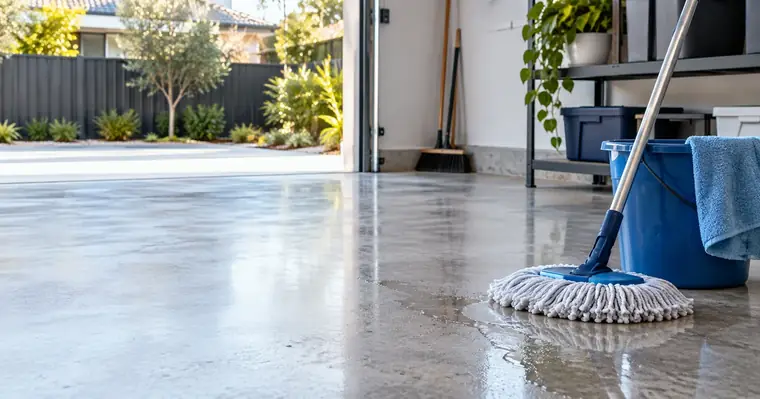
Pools are protected by keeping treatment and dirty water out of them: we work away from the edge, use lower pressure on the coping and rinse towards the garden, not the water. Garage floors are cleaned with water we can squeegee out, and coated or polished floors get a scrubber and neutral cleaner rather than a surface cleaner.
Pool coping is often natural stone or bullnose pavers bedded in mortar, and the joint at the pool edge is the weak point. A strong jet aimed along it can wash out the grout and let water behind the coping. We keep the surface cleaner back from that line and finish the last strip by hand at low pressure.
Most garages have no floor drain, so flooding the slab only pushes dirty water under stored boxes and the internal door. Bare concrete garage floors get a controlled clean with the water pushed out to the driveway as we go. Epoxy and polished concrete are a different surface altogether; high pressure can dull or lift them, so they are scrubbed instead. For a do-it-yourself version, see our guide on cleaning garage and polished concrete floors.
A newly cleaned slab is also the ideal time to seal it, since there is nothing trapped under the coating. If you are thinking about it, read about sealing concrete paths, slabs and pavers before booking both together.
Prices
What does concrete cleaning cost?
Concrete cleaning in Melbourne usually costs $3 to $6 per square metre for paths and slabs, a little more around pools, with a minimum of about $180 per visit. A typical path and alfresco area together comes to $180 to $300, and a single garage floor sits at or near the minimum charge.
| Area | Guide price | Pushes it up | Pushes it down |
|---|---|---|---|
| Paths and side passages | $3 to $6 per m² | Heavy mould, narrow gated access | Booked with the driveway |
| Alfresco and patio slabs | $3 to $6 per m² | Barbecue fat, furniture to shift | Sealed, lightly soiled slab |
| Pool surrounds | $4 to $7 per m² | Stone coping, fences in the way | Plain concrete, open access |
| Carport | $150 to $280 | Oil patches, bird droppings | Single car width |
| Garage floor, per bay | From about $180 | Stored items to move, fluids | Empty garage on arrival |
| Steps and landings | Added to the job | Many short flights | Part of a larger clean |
Grouping areas is the easiest way to get more for the money, because set-up and travel happen once. A driveway, a side path and the alfresco slab in one visit usually costs less than two separate bookings. The full rate card for every surface, including pavers, decks and house washing, is on our pressure cleaning prices page.
Quote by photo
What is the quickest way to price concrete cleaning?
Take a wide photo of each area you want cleaned and one close up of the worst patch, whether that is mould, rust or a stain. Add the suburb and a rough size, and we come back with a written price per area plus a total, so you can decide which parts to include.
Questions
What do people ask about concrete cleaning?
How much does concrete cleaning cost?
Can pressure cleaning damage concrete?
How long does it take to clean a concrete area?
Slippery path or stained alfresco?Photograph each area and get one written price back.
Send photos