
Skip to content
Public liability insured Pressure set to the surface Wash water kept out of stormwater drains Price guideQuestions

Pressure washing FAQ

Frequently Asked QuestionsPressure washing questions, answered plainly

This pressure washing FAQ answers what Melbourne homeowners, landlords and managers most often ask before booking: what it costs, whether it can damage a surface, how water, power and run-off are handled, and whether to seal afterwards. Each answer is short and direct, with a link to the page that goes into detail. For an overview of every service, start with our pressure washing in Melbourne page.
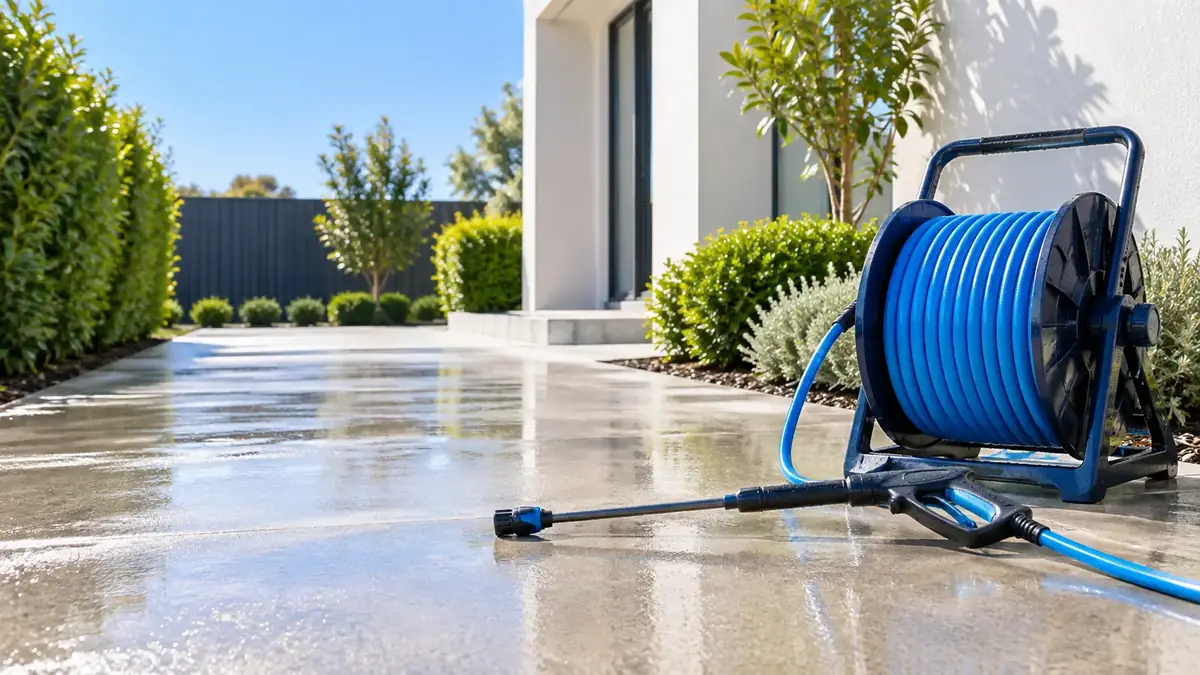
Pressure washing FAQ: hose reel and wand resting on a freshly cleaned path
Illustration, not a job photo

Cost

What should pressure washing cost?

The pressure washing questions we hear most are about cost. Most jobs in Melbourne are priced by the square metre for the surface, with a minimum charge of about $180 per visit. Plain concrete sits around $3 to $6 per square metre, softer stone and timber a little more, and house washing is priced per home, from about $350 for a single storey.

Why is pricing based on square metres?
Area is the fairest measure of time on most jobs, since a surface cleaner covers ground at a steady rate. The surface type and its condition then set the rate within the range. Jobs where area is a poor guide, such as house washing or a single stain, are priced per home or per item instead.
Do oil stains cost extra?
Yes, because oil needs its own degreaser, dwell time and hot water on top of the general clean. Each stained area is usually $60 to $150 depending on its age and size. If a stain is so old that only a shadow will lift, we say so on the quote rather than charge for a result that will not happen.
Is a deposit required to book?
Not for standard residential cleans. You accept the written quote, we book the date, and payment is due once the work is finished and you have seen it. Larger commercial jobs and deck restorations that involve buying coatings may need a part payment up front, which is shown on the quote.

Damage and surfaces

Can pressure washing damage your property?

It can when the pressure or nozzle is wrong for the surface, which is why method matters more than machine size. Concrete handles a surface cleaner at high pressure, while pavers, timber, render, paint and soft stone need lower pressure or a soft wash. Testing a hidden patch first prevents almost all damage.

What kind of damage does bad pressure washing cause?
The common kinds are swirl marks and pale stripes on concrete, furred and splintered timber, pitted sandstone, washed-out paver joints, hollowed mortar in brick, and stripped paint or cracked render on walls. Almost all of them come from a narrow tip held too close, rather than from pressure washing as such.
Is sandstone or limestone safe to clean?
Yes, with a gentle method. Soft stone is treated for moss and lichen first, then rinsed with a wide fan tip at low pressure, and never touched with acid. Some jointing sand may need replacing afterwards. A blast at full pressure, by contrast, can leave the stone rough and pitted permanently.
Will it lift paint off my house or fence?
Sound paint stays put, because painted walls and fences are soft washed with a mild cleaning mix and a low rinse rather than a jet. Paint that is already flaking or chalky can lose loose material, since it has stopped bonding. We point that out and photograph it before starting, so it is not a surprise.

Water, power and run-off

How are water, power and run-off handled?

We connect to your outside tap and run petrol machines, so no power point is needed. Water use stays within Melbourne's water-saving rules for hard surfaces, and any run-off containing oil or cleaning products is kept away from street drains by blocking, sweeping or collecting it.

Do you use my water and electricity?
We use water from an outside tap, but not your electricity, because the pressure washers run on petrol. The water used is modest: a pressure cleaner uses far less than hosing the same area. If there is no working tap near the job, let us know when quoting so we can plan around it.
Is pressure washing allowed under Melbourne's water rules?
Yes, within limits. Under the Permanent Water Saving Rules, hard surfaces can be cleaned with mains water for a hazard such as slippery growth, for built-up staining (limited to once per season), or during building work, using a pressure cleaner that delivers 9 litres per minute or less. Routine hosing down is what the rules stop.
Where does the dirty water go?
Plain wash water from a driveway usually soaks into lawn and garden edges. Water carrying oil, degreaser or heavy grime is stopped at the kerb pit with a drain cover and collected, because street drains flow untreated to creeks and the bay. Commercial sites get a full water recovery plan.

The water rules are set by Melbourne's retailers and are the same across the city; Yarra Valley Water publishes the full wording. For run-off, EPA Victoria explains why only rain belongs in stormwater drains.

Sealing

Should you seal a surface after it is cleaned?

Sealing is worth it for driveways with oil drips, exposed aggregate that has gone dull, pale natural stone and pool surrounds, because it slows staining and growth. A plain, sunny concrete path often does fine unsealed. If you do seal, the best time is a day or two after a deep clean, once the surface is dry.

How long after cleaning can a driveway be sealed?
Usually after 24 to 48 hours of dry weather, and longer in winter. Concrete holds water in its pores after a clean, and most sealers go cloudy or fail to bond if moisture is trapped underneath. We check the surface is dry right through before any sealer goes on.
Can a sealed driveway still be pressure cleaned?
Yes, at lower pressure and with a cleaner that will not soften the coating. A sealed driveway actually cleans faster, because dirt and oil sit on the surface instead of in the pores. If the sealer is worn in the tyre tracks, a light clean and a maintenance coat usually blend it back in.

Booking and the day

What happens when you book?

You send photos, receive a written price, and choose a date. On the day we arrive, check the areas with you or by message, protect gardens and drains, clean, rinse and check the result, then send photos if you are not home. Payment is due after the work is done.

Do I need to be home during the clean?
No, for most outdoor jobs. We need side gates open, cars moved and an outside tap we can use. For house washing, windows need to be shut before we start. If you are away, we message when we arrive and send finished photos before we leave.
What happens if it rains on the day?
Light rain rarely stops a pressure clean, since the surface is getting wet anyway. Heavy rain, storms or strong wind can make the job unsafe or wash treatments off before they work, and sealing or deck coating needs dry days. In those cases we move the booking to the next suitable day at no cost.

Still wondering?

Have a pressure washing question that is not answered here?

Send it through with a photo of the surface, and you get a straight answer, usually with a price attached. Questions about a specific stain, stone or deck are much easier to answer from a picture than in general terms.
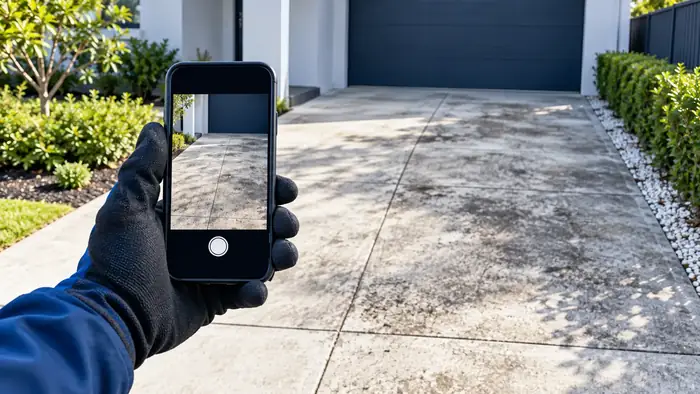
Phone photographing a stained driveway to send with a question

Ask about your surface

A photo helps us answer properly.

Ready to book? Go straight to get a quote.

Question about your own driveway or deck?Photograph it, ask, and get a clear answer back in writing.

Ask with a photo

Pressure Washing Melbourne logo

Pressure washing and soft washing for Melbourne homes, strata and businesses. Driveways, concrete, pavers, decks, brick, house walls and commercial sites, each cleaned at the pressure the surface can take.

  • Public liability insured
  • ABN registered
  • Run-off managed

Service area: metropolitan Melbourne and the Mornington Peninsula, including the western and northern suburbs, the inner city and bayside, the eastern suburbs and the south-east growth corridor.