
DIY guide
How to Clean Decking (Timber and Composite)
How to clean decking comes down to one rule: let the cleaner do the work and keep the pressure low. Timber decks need a deck cleaner to lift grey fibres and mould, a soft scrub along the boards and a gentle rinse, then a few dry days before any oil. Composite decks need even less: warm soapy water, a soft brush and the maker's care guide. Both are covered below by the crew behind our pressure washing work in Melbourne.
Sweep, apply a deck cleaner, scrub with the grain, rinse gently, and wait until the boards are dry before oiling. Never blast timber with a narrow jet.
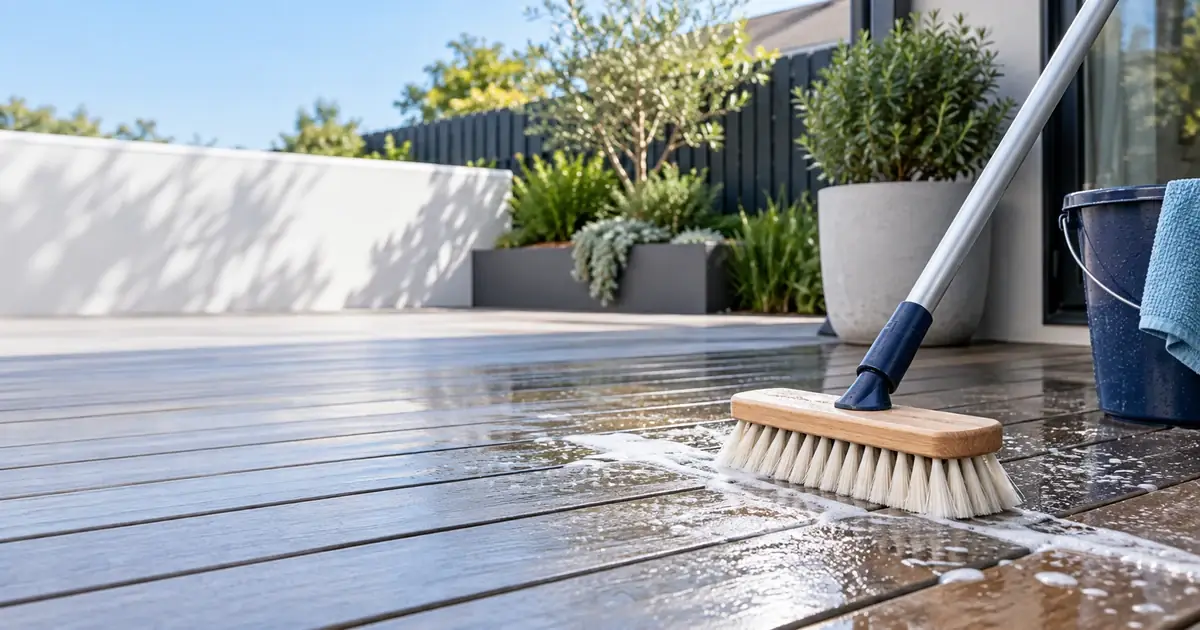
Timber or composite
Is cleaning decking different for timber and composite boards?
Yes. Cleaning decking made of timber is about removing weathered fibres and mould so the wood can take oil again. Cleaning composite decking is about removing surface dirt, pollen and mould from a plastic-rich board without scratching it. Timber tolerates a deck cleaner and a stiff brush; composite needs mild soap and a soft one.
Timber decks
- Common in merbau, spotted gum, blackbutt and treated pine
- Turn silver-grey in sun as the surface fibres break down
- Need a deck cleaner, then often a brightener for tannin marks
- Usually oiled or stained after cleaning to protect them
Composite decks
- Made from wood fibre and plastic, often with a protective cap
- Do not go grey, but collect dirt, mould and grease marks
- Need mild detergent or a composite deck cleaner
- Never oiled; strong solvents and wire brushes can mark them
Composite boards vary a lot between brands. Capped boards have a tough outer shell and clean up easily; older uncapped boards are more porous and can hold stains and mould. Most manufacturers publish a care guide with approved cleaners and, if they allow a pressure washer at all, the maximum pressure and nozzle distance. It is worth finding that guide before you start, because using an unapproved method can affect the warranty.
Products
Which deck cleaning products actually work?
An oxygen-based deck cleaner is the best all-round choice for timber: it lifts grey fibres, dirt and mould without harming the wood. An oxalic acid brightener then removes tannin and black nail stains. Strippers are only for removing old failing coatings. Household chlorine bleach is best avoided on timber.
| Product | What it does | Use it for |
|---|---|---|
| Oxygen deck cleaner | Foams and lifts dirt, grey fibres and mould | Most timber decks, as the main clean |
| Oxalic acid brightener | Removes tannin bleed and iron stains, evens colour | After cleaning hardwood, especially merbau |
| Deck stripper | Breaks down old oil, stain or varnish | Only when an old coating is flaking or patchy |
| Mild detergent | Lifts surface dirt and grease | Composite decks and light timber cleans |
| Composite deck cleaner | Targets mould and grease without harming the cap | Composite boards, as the maker recommends |
| Chlorine bleach | Kills mould but damages timber fibres and colour | Best avoided on timber decks |
Deck day
What are the steps to clean a timber deck?
Clear the deck and sweep between the boards, soak nearby plants, wet the timber, apply an oxygen deck cleaner, let it work for fifteen minutes or so, scrub along the grain, and rinse with low pressure or a bucket. Brighten tannin marks if needed, then leave the deck to dry for a couple of days.
- Clear and sweep. Move furniture and pots, sweep the surface, and clear the gaps between boards with a putty knife so water can drain.
- Protect plants. Soak garden beds around and under the deck, and cover anything delicate close to the edge.
- Wet the timber. A damp deck lets the cleaner spread evenly instead of soaking straight into dry wood.
- Apply the cleaner. Mix the oxygen deck cleaner as directed and spread it over a manageable section with a broom or roller.
- Let it foam and work. Give it ten to twenty minutes, keeping it damp; you will see grey and grime lifting.
- Scrub along the grain. Use a stiff nylon deck brush, always working with the boards, never across them.
- Rinse gently. Rinse with a bucket or a low-pressure wide fan tip held well back, moving along the boards.
- Brighten and dry. Apply a brightener to tannin or nail stains if needed, rinse, and let the deck dry for at least two days before oiling.
For a composite deck, the routine is shorter. Sweep, wash with warm water and a little mild detergent or the maker's cleaner, scrub with a soft brush, and rinse. For mould spots, use a composite-safe mould cleaner rather than bleach, and dry grease marks from barbecues with a degreaser approved for the boards.
Pressure
How much pressure is too much for a deck?
Anything that leaves the timber fuzzy, ridged or splintered is too much. On timber, keep the machine on a low setting with the widest fan nozzle, at arm's length from the surface and travelling along each board. Softwoods such as pine mark more easily than hardwoods. On composite, follow the maker's limit, and if in doubt use a brush and bucket instead.
Each board has bands of lighter, softer spring growth between darker, denser summer growth. A strong jet eats into the lighter bands first, so the surface becomes ridged and furry, holds dirt, and soaks up oil unevenly. Once that has happened the only fix is sanding. If you see raised fibres appearing while you clean, back off immediately.
After the clean
When can a deck be oiled after cleaning?
Oil a timber deck once it has dried right through, usually after two or three dry days in mild weather and longer in winter. Oil applied to damp timber stays sticky and peels. A simple check: sprinkle water on the boards; if it soaks in quickly and the timber looks evenly light, it is ready.
Choose a day with no rain forecast for at least a day, avoid hot midday sun, and apply thin coats along the full length of each board. Two thin coats outlast one thick one.
Deck mistakes
Which deck cleaning mistakes cause lasting damage?
The mistakes that cause lasting damage are blasting timber with a narrow jet, scrubbing across the grain, using chlorine bleach on timber, oiling before the deck is dry, and using wire brushes or harsh solvents on composite. Most of these need sanding or board replacement to fix.
- Narrow jets on timber. Furs and splinters the surface in seconds.
- Scrubbing across the boards. Scratches that show once the deck is oiled.
- Bleach on timber. Weakens fibres and leaves blotchy, washed-out colour.
- Oiling damp wood. The finish stays tacky and peels within months.
- Wire brushes on composite. Scratch the protective cap permanently.
- Ignoring the gaps. Leaves packed between boards hold water and rot joists.
If your deck went in before the mid-2000s, check what it is made of. Treated pine from that era was often preserved with copper chrome arsenate, the green-tinged treatment known as CCA, and an APVMA chemical review ended its use in new decks, handrails and outdoor furniture. The deck itself is fine to keep, but clean it gently, wear gloves, skip heavy sanding, and do not let the rinse water drain into a vegetable patch.
Slippery boards
How do you get mould and algae off a deck?
Treat mould and algae on a deck with a deck cleaner that contains a mould killer, or a composite-safe mould cleaner, leave it for the recommended time, then scrub along the boards and rinse. Dead growth lifts much more easily than living growth, so the waiting time matters more than scrubbing harder.
Green, slimy boards are a real fall risk, especially on steps and around pools. After cleaning, improve airflow if you can: trim plants pressing against the deck, clear the gaps between boards, and keep pot plants on feet so the boards underneath can dry.
Tannin
Why does a new deck stain the paving next to it?
New hardwood decks, especially merbau, release tannin, a natural brown dye, when rain washes over them. It runs onto nearby paving and render and leaves brown streaks. The bleeding slows after the first few months, and a deck cleaner followed by oiling reduces it.
Tannin on concrete or pavers usually fades in sunlight over time, and an oxygen-based cleaner helps it along. Protect nearby light-coloured surfaces during the first wet season if you can.
Routine
How often does decking need a proper clean?
Most Melbourne decks need a proper clean once a year, ideally in spring before summer use, with sweeping and gap clearing through the year. Shaded decks that grow algae benefit from a quick clean in autumn as well. Composite decks usually just need a wash a couple of times a year.
Between cleans, sweep leaves before they sit wet, wipe food and barbecue spills straight away, and use mats under pots and grills. On the Mornington Peninsula and near the bay, salt spray greys timber faster, so a yearly clean and recoat is well worth keeping to.
Beyond DIY
When is it better to get a deck cleaned professionally?
Get professional help when the deck is large or multi-level, when old coatings are peeling and need stripping, when mould has made it slippery, or when you want the cleaning timed perfectly for oiling. A professional low-pressure clean saves hours and avoids the furring that DIY pressure washing so often causes.
Our deck cleaning service for timber and composite uses deck cleaners and low pressure along the grain, and a single photo is enough for us to quote.
Decking questions