
Oil, grease, tyre marks and paint
Oil Stain Removal from Concrete and Driveways
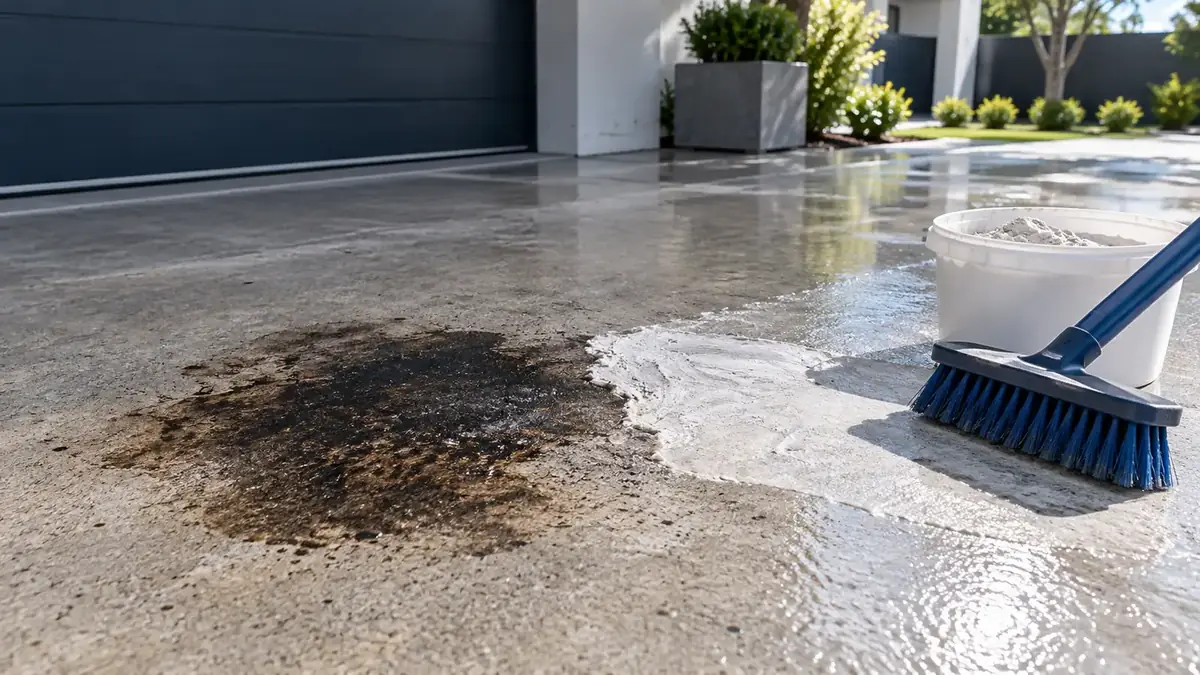
Oil stain removal for Melbourne driveways, carports, garage floors and car parks, using degreasers, poultices and hot water rather than brute pressure. Fresh drips usually lift completely, while a patch left to soak in over many years often ends up as a faint shadow, and we tell you which to expect before you book. It is a specialist part of our pressure washing across Melbourne, often done alongside a full driveway clean.
- Stain
- 1 to 2 m² patch
- Treatment
- Degreaser + heat
- Dwell time
- 20 to 40 min
- Guide price
- $60 to $150
Why oil is stubborn
How does oil stain removal from concrete in Melbourne work?
Oil stain removal from concrete works by breaking the oil down and drawing it back out of the pores, not by blasting the surface. A degreaser loosens it, heat thins it, and a poultice pulls up what has soaked deep. Pressure only rinses away what those steps have already released.
Concrete behaves like a hard sponge. It is full of tiny capillaries, and oil is thin enough to creep down into them and thick enough to stay there once it arrives. A drip that lands today sits in the top millimetre or so. After a few months of summer heat and car tyres pressing it in, it has spread wider and deeper. After several years, oil can sit well below the surface, where no cleaner can fully reach it.
That is why a strong jet on its own tends to disappoint. It removes the dirty oil on top, the stain looks better while wet, and then it reappears as the slab dries and the deeper oil wicks back up. Worse, holding a narrow tip over one patch etches the cement paste and leaves a pale ring around a still-dark centre.
Engine oil, transmission fluid, brake fluid and power steering fluid behave a little differently, and so do the black marks left by tyres. Each gets the same principle, though: dissolve or digest first, rinse second.
Simplified slab cross-section. Real depth depends on how porous the concrete is and whether it was ever sealed.
Method
Which methods lift oil out of concrete?
Three methods do the heavy lifting: a concrete degreaser to break the oil down, hot water to thin it so it releases, and a poultice to draw deep oil up as it dries. Most stains need the first two; old, soaked-in patches get all three, sometimes over two visits.
Degreaser
An alkaline concrete degreaser is worked into the stain with a stiff brush and left to dwell. It turns oil into something water can carry away. Enzyme and bacteria-based products do a slower version of the same job, digesting oil over days rather than minutes.
Best for: fresh drips, tyre marks, barbecue fat
Hot water
Water heated to around 60 to 80 degrees thins oil the way hot water loosens grease on a baking dish. Run through a surface cleaner after the degreaser, it releases far more oil than cold water at the same pressure, without needing more force.
Best for: larger patches, garages, car parks
Poultice
An absorbent powder mixed with a solvent into a paste, spread over the stain and covered. As it dries it pulls oil up out of the pores. It is slow, often left for a day or more, but it is the only thing that reaches oil sitting deep in the slab.
Best for: old, dark, soaked-in stains
On the day, we photograph the stain dry, apply the degreaser and let it sit for twenty to forty minutes, agitate it, then clean with hot water. If it is still dark once dry, we either repeat the cycle or leave a poultice in place and return to rinse it. Photos taken before and after, both dry, are the only fair comparison, since wet concrete always looks better than it is.
What to expect
How much of your oil stain will come out?
How much comes out depends mostly on age and whether the concrete was sealed. A stain from the last few weeks usually disappears. One that is a year or two old usually lightens a lot. Stains older than five years on bare concrete tend to leave a shadow, even after several treatments.
- Likely result
- Gone, or close to it.
- What we use
- Degreaser and one hot-water pass.
- Before we arrive
- Cover it with cat litter or sawdust and leave it; do not hose it.
- Likely result
- Most of it lifts; a faint mark may stay on bare concrete.
- What we use
- Degreaser, dwell time and hot water, sometimes twice.
- Before we arrive
- Fix the leak if you can, or the patch will simply return.
- Likely result
- Clearly lighter, with an outline that may remain.
- What we use
- Two degreaser cycles, hot water, then a poultice if needed.
- Before we arrive
- Send a dry photo in daylight so we can judge the depth.
- Likely result
- A lighter shadow rather than a clean slab.
- What we use
- Poultice over a day or two, with a second visit to finish.
- Before we arrive
- Decide whether a shadow is acceptable, or plan to seal or resurface.
Sealed concrete is the exception that makes life easy. If the driveway was sealed and the sealer is still intact, oil mostly sits on top of the coating, and even older stains often come off well. The catch is that some cleaners soften sealers, so we check what is there before choosing one.
If you have caught a fresh spill and want to deal with it now, our guide on removing oil stains from concrete yourself covers the cat litter method, which degreasers are worth buying, and when to stop scrubbing and call someone in.
Paint and other marks
Can paint be cleaned off concrete as well?
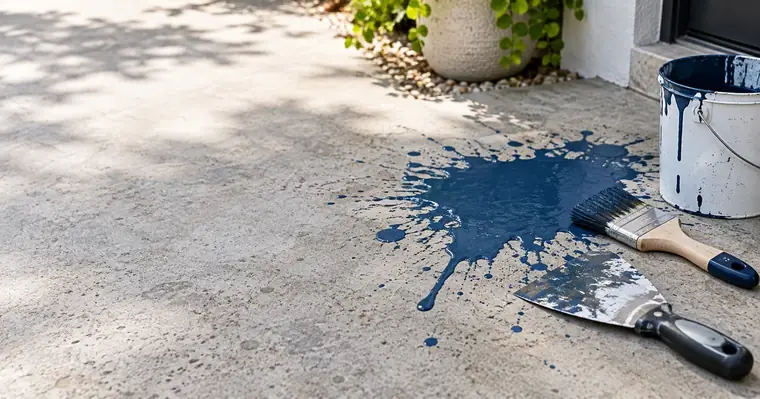
Yes, most paint can be cleaned off concrete, but the method depends on the paint. Water-based acrylic usually lifts with a stripper and a hot rinse. Oil-based enamel and spray paint take a stronger stripper and more dwell time, and very old or thick paint can leave a faint outline.
Spills from painting fences and walls. Softened with a stripper made for the paint type, then scraped and rinsed.
Trims, doors and metal. Slower to break down, and more likely to leave a ghost mark on porous concrete.
Line marking or tagging. Stripper plus hot water, with a test patch first on coloured slabs.
The square left where a tray sat. Often the easiest to lift because the paint is thin.
The worst thing to do with fresh paint is hose it, which spreads it wider and sends it towards the drain. Scrape up what you can and leave the rest to dry. There is a full walk-through in our guide on how to clean paint off concrete.
Protecting the surface
How is the concrete protected while oil is removed?
The concrete is protected by letting products do the work instead of force, testing any cleaner on a corner of coloured or sealed concrete first, and keeping the surface cleaner moving so it never dwells on one spot. Oily run-off is contained and collected, never rinsed to the street.
Coloured concrete needs the most care, because many degreasers and strippers can lighten the colour coat as well as the stain. Exposed aggregate is fine with degreaser, but the stones around a stain can loosen if someone chases it with a narrow jet. Garage floors with epoxy or paint coatings get a solvent suited to the coating, since a strong degreaser can lift it in sheets.
Water with oil in it is exactly what should not reach a street drain. EPA Victoria lists oil and car fluids among the pollutants that must be kept out of stormwater, and its stormwater guidance applies to householders and businesses alike. We block the kerb pit or nearest drain, soak up the oily water with absorbent, and take the waste away with us.
One more thing protects the slab after we leave: fixing the leak. A car that drips will re-stain the same patch within weeks, so we suggest a drip tray or mat until the car is repaired.
Prices
What does oil stain removal cost in Melbourne?
A single oil stain costs about $60 to $150 to treat when it is added to a driveway or concrete clean. As a stand-alone job it falls under the minimum charge of around $180. Several stains across a garage or carport usually come to $150 to $300, and poultice work that needs a return visit is quoted separately.
| Job | Guide price | Notes |
|---|---|---|
| One stain, added to a clean | $60 to $150 | Most common; shares set-up with the driveway clean |
| Stain treatment on its own | From about $180 | Minimum charge covers travel and set-up |
| Garage or carport, several stains | $150 to $300 | Depends on number, age and coatings |
| Poultice with a return visit | Quoted per stain | For old, deep stains only |
| Paint removal from concrete | Quoted from photos | Paint type and area decide the stripper and time |
Rates for every other surface are on our pressure cleaning price list. If the stain is old, we would rather give you a lower-cost first treatment and a clear picture of what is left than promise a result no one can deliver.
Photos for a quote
What photos help us judge an oil stain?
Two dry daylight photos tell us nearly everything: one from standing height showing the whole stain and the concrete around it, and one close up with a shoe or coin beside it for scale. Let us know roughly how old the stain is and whether the concrete was ever sealed.
Getting a useful photo
- Wait until it is dry. Wet concrete hides how dark a stain really is.
- Use daylight. Garage lights and flash make oil look lighter or darker than it is.
- Add something for scale. A shoe beside the stain is perfect.
- Tell us its age. Even a rough guess changes what we recommend.
Send the photos with your suburb through our quote form. We reply with the treatment we would use, a written price and a straight answer about how much will come out.
Get a quote for the stainQuestions
What do people ask about removing oil stains?
How much does it cost to remove an oil stain?
Will removing the stain damage the concrete?
How long does oil stain removal take?
Stain under the car that will not budge?Send a dry daylight photo and get an honest answer.
Send a photo