
Clean first, then protect
Concrete, Driveway and Paver Sealing
Concrete, driveway and paver sealing in Melbourne, always done straight after a deep clean so nothing gets locked in under the coat. A sealer slows oil and wine stains, makes mould less likely to take hold and helps pavers keep their jointing sand, and some types bring back the colour of exposed aggregate. The cleaning half is the same careful work described across our Melbourne pressure washing pages.
- Surface
- Double driveway
- Visits
- Clean, then seal
- Walk on
- Next day
- Guide price
- $10 to $18 per m²
Why seal at all
What does concrete cleaning and sealing in Melbourne achieve?
Concrete cleaning and sealing in Melbourne gives a surface that resists stains, sheds water, grows less mould and cleans up faster next time. The clean removes everything in the pores; the sealer then fills or covers those pores so oil, wine, rust and dirt have somewhere harder to soak into.
Sealing is not the right answer for every surface. A plain broom-finished path that nobody spills on may be better left bare and cleaned now and then. Where sealing earns its keep is on driveways with cars dripping oil, alfresco areas near a barbecue, pool surrounds that grow algae, pale natural stone that shows every stain, and exposed aggregate that looks tired and dusty without a coat. We will tell you honestly if a surface does not need it.
Exposed aggregate is the surface people most often ask us to seal, and for good reason. The stones are held in by the cement around them, and an unsealed aggregate driveway slowly loses its surface paste to weather and tyres, so pebbles start to loosen along the edges and at the garage entry. A film sealer binds the top layer together and brings back the colour of the stones, which is why newer estate driveways often look dull and chalky after five or six years unsealed. A clean and seal at that stage makes a big visual difference for a modest outlay.
Sealer types
Which sealer suits your driveway or pavers?
For most plain concrete driveways and natural stone, a penetrating sealer is the safest choice because it keeps the natural look and grip. For exposed aggregate and coloured concrete where you want richer colour, an acrylic sealer is common. Garages and workshop floors suit harder polyurethane or epoxy systems.
| Sealer | Look | Typical life | Best on |
|---|---|---|---|
| Penetrating (silane, siloxane) | Natural, no shine | Around 5 years or more | Plain concrete, sandstone, limestone, bluestone |
| Water-based acrylic | Satin, mild colour lift | 2 to 3 years | Pavers and coloured concrete, low odour sites |
| Solvent-based acrylic | Gloss, strong wet look | 2 to 4 years | Exposed aggregate and stencilled driveways |
| Polyurethane or epoxy | Hard gloss coat | Longer, but repairs are harder | Garage and workshop floors under cover |
Gloss looks great on day one and less great after a wet winter, because a shiny sealed surface can become slippery when wet. On sloping driveways, pool surrounds and front steps, we add a fine anti-slip grit to film sealers or steer you towards a penetrating product. For paved areas, see how the stone is cleaned beforehand on our paver cleaning page; for driveways, the method is covered under driveway cleaning.
How a seal goes on
How is a driveway cleaned and sealed?
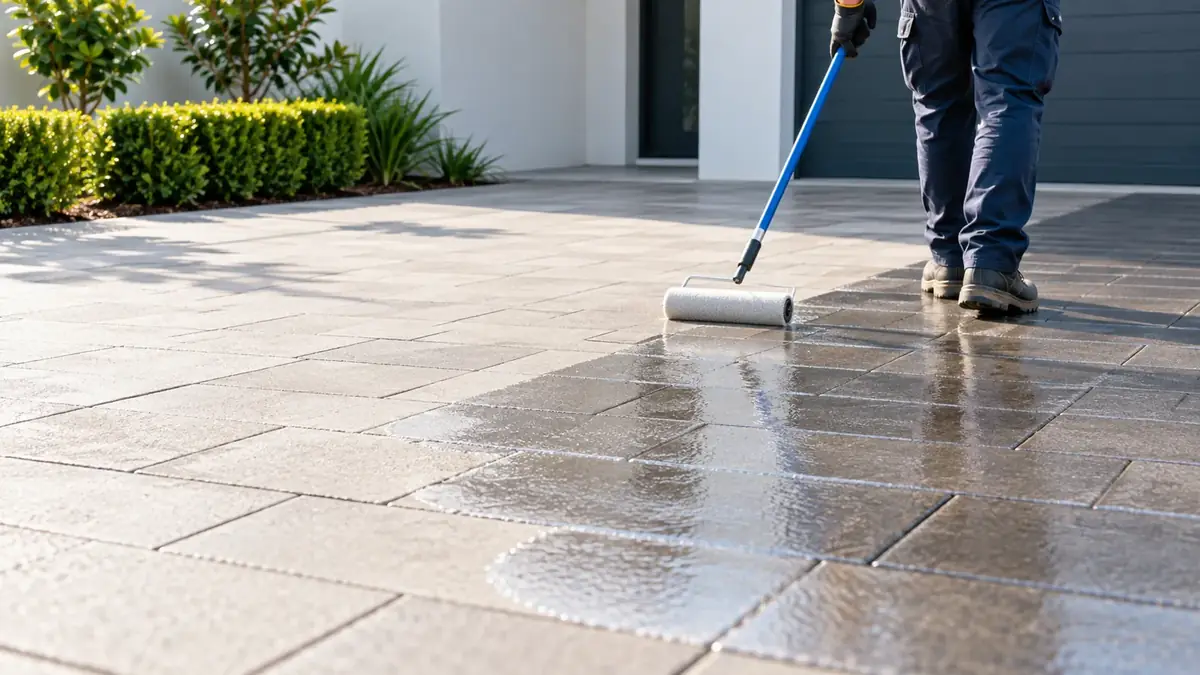
A driveway is cleaned and sealed over two visits: a deep clean with stains treated, a drying gap of at least a day, then the sealer rolled or sprayed on in thin, even coats. The driveway stays closed until the product has cured, which is usually overnight for foot traffic and a few days for cars.
- Visit oneDeep clean
Surface cleaner, stain treatment and a thorough rinse of every joint.
- Visit oneRepairs noted
Cracks, loose stones and old sealer flaking are photographed and discussed.
- GapDry out
At least 24 to 48 hours, longer in cold or damp weather.
- Visit twoSeal
Edges cut in by brush, then thin coats by roller or low-pressure sprayer.
- CureKeep off
Walk on it the next day; drive on it once the product allows.
Moisture is the enemy of a good seal. Film sealers put on over damp concrete trap the water, and the coat turns milky white in patches, a problem known as blushing. That is why rain the night before moves the sealing day. It is also why sealing is best booked for the drier months, from late spring into autumn, when concrete dries through reliably.
Sealer left in rollers and trays is not rinsed at the kerb. EPA Victoria's stormwater page points out that paint-type products belong nowhere near a street drain, so tools are cleaned into a container and the waste goes with us.
Natural stone gets its own treatment. Sandstone, limestone and travertine are sealed with an impregnating sealer made for stone, which soaks in and repels water and oil without leaving a film that could trap moisture and flake. Some of these products darken the stone slightly and some leave it looking untouched, so we apply a test patch in a hidden corner and let you see it dry before the whole patio is done. Bluestone is dense enough that it absorbs very little, and often only needs sealing where it sits near a barbecue or a pool.
Already sealed?
How do you clean concrete that is already sealed?
Sealed concrete is cleaned at lower pressure with a pH-neutral or sealer-safe cleaner, because strong degreasers and high heat can soften acrylic coats. If the sealer is worn in traffic areas but sound elsewhere, a clean and a fresh maintenance coat often blends it back in without stripping.
Drops that bead and sit on the surface mean a sealer is still working.
A darker, richer band that stops at a line often marks where sealer was applied.
Dull, grey tyre tracks on a glossy drive show where the coat has worn through.
What happens next depends on the condition of the old coat. A worn but intact acrylic takes a light clean and a recoat of the same type. A sealer that is peeling, flaking or has turned white in large patches usually needs stripping first, because new sealer laid over failing sealer fails with it. Mixing types is the other common mistake: a water-based product over an old solvent-based coat, or the reverse, can wrinkle or refuse to bond, so we test on a small patch before committing.
Sealed surfaces also change how stains behave. Oil and wine sit on top rather than soaking in, so wiping a spill up the same day usually leaves no mark at all. It is one of the easiest ways to keep a driveway looking cared for between professional cleans.
Several things shorten a sealer's life in Melbourne. Full afternoon sun breaks down acrylic faster than shade does. Hot tyres turning on the spot scuff it at the garage entry. Harsh cleaners and hardware store acid washes strip it. Pool chemicals, salt spray on the peninsula and fertiliser pellets left on the surface all eat at it too. Knowing which of these applies to your driveway tells you whether to expect a two-year or a five-year life before the next coat.
Prices
How much does cleaning and sealing cost?
Cleaning and sealing in Melbourne usually costs about $10 to $18 per square metre for a driveway or paved area, including the clean and two coats. Penetrating sealers sit at the lower end, solvent-based acrylics higher. Stripping failed old sealer adds significantly and is quoted after a close look.
| Work | Guide price | Notes |
|---|---|---|
| Clean plus penetrating sealer | $10 to $14 per m² | Plain concrete and natural stone |
| Clean plus two coats of acrylic | $12 to $18 per m² | Exposed aggregate, coloured concrete, pavers |
| Maintenance recoat over sound sealer | $7 to $11 per m² | Includes a light clean |
| Anti-slip additive | Small extra per m² | Recommended on slopes and pool areas |
| Stripping old sealer | Quoted on inspection | Depends on product and layers |
For comparison, cleaning-only rates are listed on our pressure cleaning prices page. If you are unsure whether sealing is worth it for your surface, ask for both options on the one quote.
Clean and seal quote
What should you send for a sealing quote?
Send a wide photo of the surface, a close up showing its texture, and tell us whether it has been sealed before and roughly when. Add the suburb and approximate size, and let us know if you want a natural look or a darker wet look, so we can price the right product.
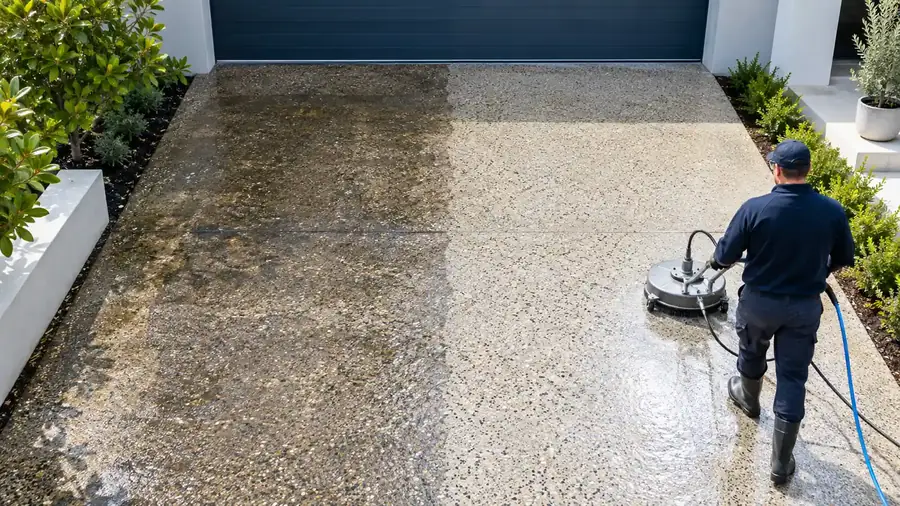
Wide and close. One of the whole area, one showing the surface texture.
Sealer history. Sealed before? When, and do you know the product?
The look. Natural and matt, or a darker wet look.
Sealing FAQ
Anything else worth knowing before booking a seal?
What does a driveway clean and seal cost?
Can sealing make my driveway slippery or patchy?
How long before I can use the driveway again?
Keep the clean looking clean for longerPhotograph the surface and we will price the clean and the sealer together.
Send photos