
Clean, dry, oil or stain
Deck Cleaning and Staining
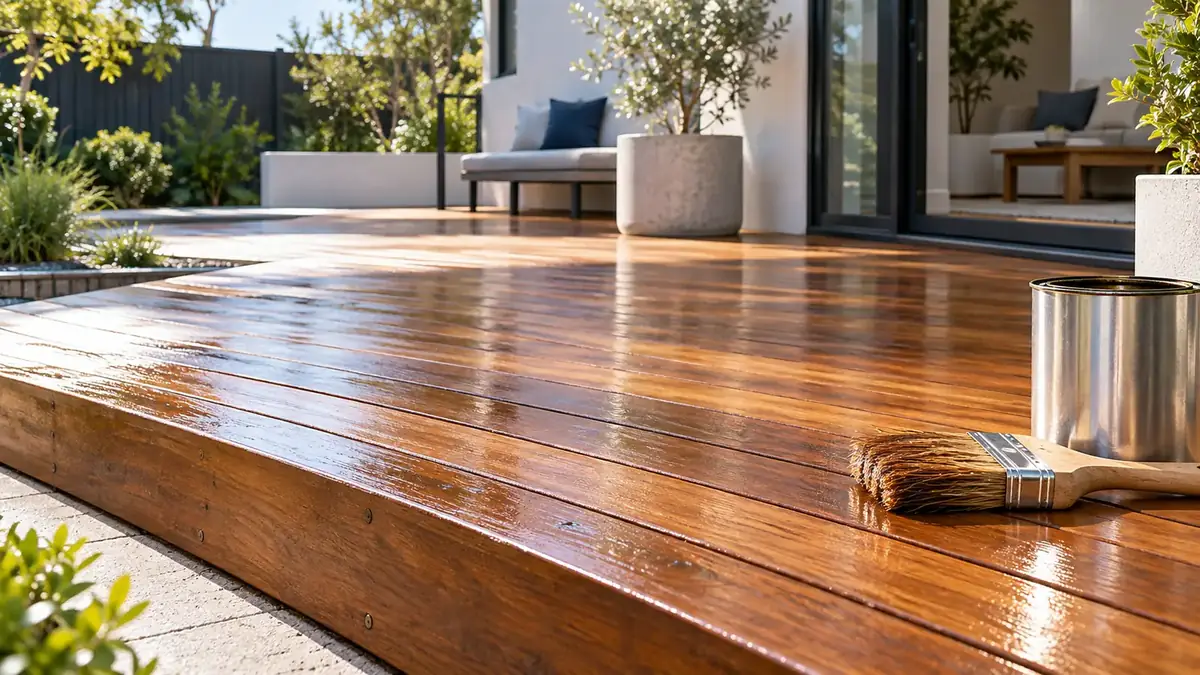
Deck cleaning and staining for Melbourne timber decks: a proper clean, time for the boards to dry, a light sand where the grain has lifted, then a penetrating oil or stain that brings the colour back and shields the timber from sun and rain. It turns a grey, splintery deck into one you want to sit on again. The cleaning half follows the same careful method as the rest of our Melbourne pressure washing work.
- Deck
- 25 to 40 m²
- Visits
- Clean, then coat
- Coats
- Usually two
- Guide price
- $20 to $35 per m²
The full restoration
What does deck cleaning and staining in Melbourne include?
Deck cleaning and staining in Melbourne includes four stages: a deep low-pressure clean, one to three days of drying, a light sand of any raised or rough boards, and two coats of penetrating oil or stain. Steps, fascia boards and handrails are included if you want them, and furniture goes back once the finish has cured.
- CleanDay one
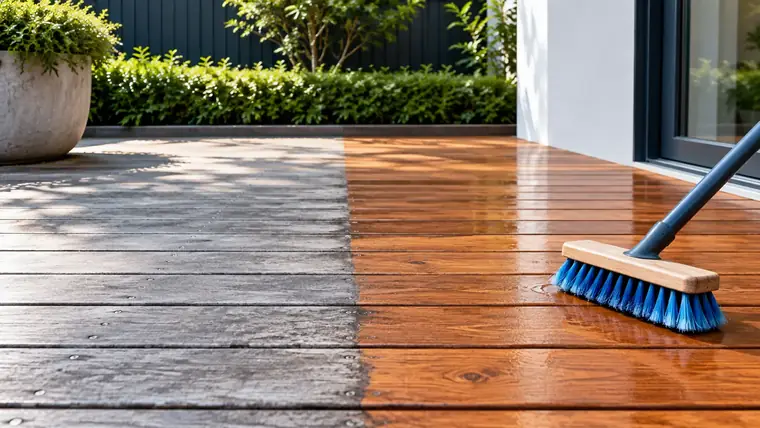
Deck cleaner and a low-pressure rinse remove grey fibres, mould and old flaking oil.
- DryOne to three days
The timber must dry right through, or the new coat sits on top and peels.
- PrepareCoating day
Raised grain and rough patches sanded, screws checked, edges masked.
- Oil or stainSame day
Two thin coats worked into the boards, with the ends of each board sealed too.
Most of the difference between a deck finish that lasts and one that peels in a season happens before the tin is opened. Oil can only soak into timber that is clean and dry. Coat over grey fibres and the oil soaks into loose material that washes away with the next rain; coat damp timber and it stays tacky, then flakes. That is why we split the job over at least two days, and why rain in the forecast moves the coating day rather than being ignored.
Timing through the year matters in Melbourne. Spring and autumn are the best seasons for coating: mild days, cooler nights and timber that dries out reliably between showers. Midsummer works if the coating is done early in the morning or late in the day, since oil applied to hot boards in full sun flashes off before it can soak in. Winter is the hardest season, because decks can stay damp for days, so we usually recommend cleaning in winter and coating once the weather settles.
If your deck only needs a clean for now, or you plan to oil it yourself, our separate low-pressure deck cleaning service covers the first stage on its own.
Choosing a finish
Should your deck be oiled or stained?
Choose a clear or natural oil if you love the timber's own colour and do not mind recoating more often. Choose a tinted oil or semi-transparent stain if the boards are uneven in colour or you want longer protection from sun. Avoid film coatings like varnish and deck paint on horizontal boards, because they peel under foot traffic.
| Finish | Look | Sun protection | Typical recoat |
|---|---|---|---|
| Clear or natural oil | Timber's own colour, deepened | Low | 6 to 12 months in full sun |
| Tinted oil | Warmer, more even colour | Moderate | 12 months or so |
| Semi-transparent stain | Colour with grain showing | Good | 12 to 24 months |
| Solid stain | Opaque, grain hidden | High | Longer, but hard to change later |
| Varnish or deck paint | Glossy film on top | High at first | Peels on walking surfaces; not recommended |
This matches the timber industry's own advice. WoodSolutions, the Forest and Wood Products Australia guide to decking, notes that penetrating finishes such as decking oils and stains suit deck boards better than film-forming coatings, and that decks should be cleaned and recoated regularly. Water-based and oil-based decking products both work well; water-based dries faster and smells less, while solvent-based oil soaks deeper into dense hardwoods.
Species matters too. Merbau is oily and dense, so thin coats are essential or the finish sits on top and stays sticky. Treated pine drinks oil readily and often needs a second coat sooner. Spotted gum and blackbutt sit in between and take a tinted oil very evenly.
Recoat timing
How often will the deck need recoating?
Most Melbourne decks need a maintenance coat every 12 months or so. North and west-facing decks in full sun can need it every six to twelve months, while shaded or south-facing decks often last up to two years. The water test below tells you when yours is due.
A maintenance coat is far cheaper than a restoration. If you recoat while the old finish is still partly intact, the deck only needs a light clean and one coat. Leave it until the boards are grey again and it is back to the full process of cleaning, drying, sanding and two coats.
The finish is still working. Check again in a few months.
The timber is bare. A maintenance coat is due now.
Guide intervals for a penetrating oil. Stains usually last longer; coastal decks need attention sooner.
Before the new coat
What has to come off before a deck is stained?
Everything that would stop the new finish soaking in has to come off: grey weathered fibres, mould and mildew, dirt and pollen, and any old coating that is flaking or patchy. Black nail stains and tannin marks are brightened out, and raised grain is sanded smooth so the new coat goes on evenly.
Old coatings are the part that decides how big the job is. A deck that was oiled a year or two ago usually just needs a clean before recoating, because the old oil has worn away evenly and the new coat blends in. A deck with patchy, peeling varnish or paint needs that film stripped completely, since fresh oil cannot soak through it. Stripping is slower and is quoted separately once we see the boards.
Tannin marks from merbau and black rings around nails are removed with a timber brightener after the clean. It also lifts the colour of grey hardwood noticeably, which means the finished deck looks more even and needs less tinted product to hide blotches.
Around the deck
How are your house and garden protected while the deck is coated?
Walls, door thresholds, pavers and pool coping next to the deck are masked before any oil goes on, and plants below are covered. Coats are applied thin, so nothing drips through the gaps, and the deck is roped off until it is dry enough to walk on.
Oil on render or pavers stains quickly and is hard to remove, so the edges of the deck are cut in by brush and masked where they meet other surfaces. Brick steps and concrete paths beside the deck get a drop sheet. We also plan around the weather: no coating on days above the product's temperature limit, in direct midday sun on a dark deck, or with rain expected before the finish has cured.
Used rags and applicator pads from oil-based products are laid out flat to dry outdoors and taken away with us, because oily rags left bunched up can self-heat. It is a small detail, but it is the kind that matters when a job finishes late in the afternoon.
Prices
How much does deck cleaning and staining cost?
A full clean plus two coats of oil or stain usually costs about $20 to $35 per square metre in Melbourne, so a 30 square metre deck is roughly $600 to $1,050. A maintenance coat on a deck in fair condition costs less, and sanding or stripping old coatings adds to it.
| Work | Guide price | Notes |
|---|---|---|
| Clean plus two coats | $20 to $35 per m² | Most common restoration |
| Clean plus one maintenance coat | $14 to $22 per m² | For decks recoated within about two years |
| Light sand of raised boards | $8 to $15 per m² | Only where the grain has lifted |
| Stripping varnish or paint | Quoted on inspection | Depends on coating and layers |
| Steps, fascia and handrails | Added per item | Slow brush work, priced by length |
If you only want the deck washed, the cleaning-only rates sit with every other surface in our pressure cleaning price guide. Over ten years, a yearly maintenance coat costs far less than letting the deck go grey and paying for a full restoration every few summers.
Restoration quote
What do we need to quote a deck restoration?
We need photos of the whole deck and a close up of the boards, the rough size, the timber if you know it, and what finish is on it now. Tell us the colour or look you are after as well, and we will suggest a product and send a written price for the full job.
Whole deck and boards. One wide shot, one close up at the worst spot.
Current finish. Oiled, stained, varnished, painted, or bare.
The look you want. Natural, warmer, or darker; a photo of a deck you like helps.
Questions
What do people ask about deck staining?
How much does it cost to clean and stain a deck?
Can cleaning and staining harm the timber?
How long does a deck restoration take?
Want the colour back in your deck?Send photos and get a written price for a full clean and coat.
Send photos